- Call us 01444 237070

-
- Back
- Used Cameras
- Used Accessories
- Used Lenses
- Back
- Used Canon Lenses
- Used Nikon Lenses
- Used Fujifilm Lenses
- Used Sony Lenses
- Used Micro 4/3rds Lenses
- Used Leica Lenses
- Used Panasonic Lenses
- Used Pentax Lenses
- Used Samyang Lenses
- Used Sigma Lenses
- Used Tamron Lenses
- Used Tokina Lenses
- Used Voigtlander Lenses
- Used Zeiss Lenses
- Used Hasselblad Lenses
- Used Video
- Used Film Equipment
- Used Stock Alert
- Used Blank Test
- Sell or Part Exchange
- Used Clearance
- Recently Added Used Equipment
- Park Picks
- Faulty
- Trade-In
- Blog
- New in
- Call us
- Contact us
- Stores
- Sign in
product
E-16-05
Call us: 01444 237070
Search terms
Brands
Category
Products
[[{name}]]
[[{attributes.Price}]]
- Categories
- Tips & Inspiration
- Reviews
- News
- Events
- Features
- Buying Guides
- Competitions
Sigma 24-70mm f/2.8 DG DN II Art Lens Review
For many creators the quest for the perfect lens collection ends with the holy trinity, which includes an f/2.8 wide zoom, standard zoom and a telephoto zoom. Arguably the most popular of these three is the standard 24-70mm f/2.8, thanks to its exceptional versatility.
The Sigma 24-70 2.8 Sony is one of the most prized of all, combining superb image quality with a relatively affordable price aimed at enthusiast and professional photographers. The L-mount version enjoys similar popularity for the same reasons, and our Sigma 24-70mm f/2.8 DG DN II Art Lens review uncovers what you can expect from this second-generation flagship zoom, including a specs comparison between Mark I vs Mark II versions.
Having owned the previous model for the last three years, I was very excited to have the opportunity to try the new one and see how it compares. The original Sigma Sony 24-70 f/2.8 Art is a brilliant all-rounder, and I was thrilled when the mark II was sent over. So let's dive right in and explore how it compares, beginning with the price of the newer zoom.

How much does it cost?
Sigma has done a remarkable job, as this Art series option costs £1179.00 for both Sony E and Leica L-mounts, which represents a modest price increase from its predecessor, yet remains significantly more affordable than comparable versions from other brands.

When was it released?
Released on May 16, 2024, the 24-70mm F2.8 DG DN II | Art arrived just 4.5 years after its predecessor. This rapid development highlights its importance, emphasising the role of a 24-70 f/2.8 as a flagship zoom for creators who rely on the zoom range.

Sample wild garlic II landscape photography @31mm. Settings: 1.6 sec. f/11. ISO 100 (tripod mounted)
Sample images
Nick Dautlich was fortunate to have nearly a week with the mark II, and embarked on several photo shoots spanning various genres in order to capture varied sample images. This provided ample opportunity to test its performance as an everyday general-purpose lens, which it will be for many photographers.
He covered subjects like cityscapes, landscapes and sunrise colours, night photography, environmental portraits, close-ups, as well as dogs running and birds in flight at the beach. This variety provided insights into AF speed and tracking performance, resolution, colour rendition and ergonomics.

Sample ladybird close-up @70mm. Settings: 1/2500 sec. f/2.8. ISO 100
What are the key upgrades for gen. 2?
The second-generation has undergone numerous updates, making it smaller, lighter, and faster than its already compact and fast-focusing predecessor. Additionally, image quality is slightly enhanced, and there are new features, which are especially useful for filmmakers, who benefit significantly from the upgrades.
Key improvements include:
- 7% smaller and 10% lighter
- Improved resolution throughout the zoom range
- New aperture ring (with a click switch)
- New AF linear motor HLA (High-response Linear Actuator), with 3x quicker drive speed
- Slight improvements to minimum focus distance across the range
- One additional customisable AFL button (two in total)

Sample dog jumping at beach @33mm. Settings: 1/2000 sec. f/2.8. ISO 125
What hasn’t changed is equally important to the overall performance:
- 11-blade rounded diaphragm
- Strong flare and ghosting resistance
- Excellent build-quality with a dust and splash resistant structure
- Support for DMF and AF+MF
- Water and oil repellent coating on the front element
See the table further below in this review for a comprehensive look at the specifications.

Sample girl playing at beach @37mm. Settings: 1/1000 sec. f/2.8. ISO 100
Are there any differences between the Sony E and Leica L versions?
There are a few differences between the E and L versions, including compatibility with USB DOCK UD-11, which is optionally available for L-mount only. The L-mount version also benefits from the ability to switch between linear/non linear focus, while only the Sony model is compatible with AF assist.
The weight is also slightly different, although this will be barely imperceptible to most users. Let’s explore what you can capture with a zoom and why it is such as popular model.

Sample landscape photography @70mm. Settings: 1/40 sec. f/9. ISO 100 (tripod mounted)
What is a 24-70mm lens for?
The popularity is due to its versatile focal range, which covers 24mm, 35mm, and 50mm, each of which is broadly useful. This model also benefits from a wide f/2.8 aperture, enabling distinct subject background separation.
Some of the most popular genres covered by this zoom range include:
- Landscape photography
- Cityscapes
- Environmental portraits
- Street photography
- Documentary
- Regular portraits and lifestyle shots
- Weddings and events
- Travel photography
- Close-ups
- Video
- Everyday general-purpose shooting
You can even capture subjects as diverse as products and food photography, close-up wildlife and sports or virtually anything, which doesn’t require a telephoto. It’s a brilliant focal range for everyday snapshots, so you can bring just one option and capture everything from sunrise to sunset!

Sample seagull in flight @70mm. Settings: 1/2000 sec. f/2.8. ISO 1600 (cropped)
Why is the f/2.8 aperture important?
This includes an 11-blade rounded diaphragm with a wide f/2.8 maximum aperture, which differentiates it from comparable Contemporary zooms. A wider aperture allows you to shoot at faster shutter speeds in lower lighting conditions and create a shallower depth of field.
This is very beneficial when capturing any subject, which you want to separate from background distractions, such as for portraits. The 11-blade opening renders smooth rounded circular bokeh balls and soft defocus areas, which can look stunning in certain situations.
A wide aperture is less beneficial to photographers who predominately captures landscapes, cityscapes or subjects at narrower apertures with a deeper focal plane. However the sharpness will be an advantage for these types of subjects, where detail, clarity and resolution are beneficial.
Let’s find out more about image quality next.

Sample river harbour @35mm. Settings: 1/1000 sec. f/2.8. ISO 100
How is image quality?
The original 24-70 offers outstanding image quality, and the updated optical formula is similar, keeping 19 elements in 15 groups. The newer model does include two additional aspherical elements, now featuring 6 FLD, 2 SLD, and 5 aspherical special elements in total.
The sum of these is to render high resolution, improve edge sharpness and control various aberrations including colour fringing, which it does very successfully. Whichever camera you use this will keep pace with the highest resolution sensors currently available.
I’ve owned the first version for several years and it has never disappointed, with incredibly sharp and detailed results, even on high-resolution 60 megapixel Sony mirrorless cameras. Many of my favourite ever photographs are made with the Sigma lens, and the mark 2 delivered even more impressive results on a Sony A7R V camera, so it should perform equally well for Leica, Sigma and Panasonic Lumix S series users.

Sample harbour building @50mm. Settings: 1/1250 sec. f/2.8. ISO 100
All of the sample images demonstrate razor sharp details throughout the frame, with just some distortion towards the outer corners when shooting at the widest focal widths. It has absolutely no problem rendering 60 megapixels with staggering detail and superb clarity, showing a step up in optical performance from an already superb first generation.
Subject separation and falloff from in-to-out of focus is beautiful, with lovely sharp subjects and soft blurry backgrounds easily achievable.
Aside from the optical design, factors which contribute to image quality include the suppression of image artefacts caused by incidental and backlight. The optical design suppresses flare and ghosting, and additionally a Nano Porous Coating and Super Multi-layer Coating help maintain rich, high-contrast results in difficult lighting conditions.

Sample horse riding at beach @70mm. Settings: 1/1250 sec. f/2.8. ISO 100
This is great news which benefits all sorts of subjects, whether capturing landscapes with sunstars or portraits with backlighting. In practice it did a great job suppressing flare, with some excellent contrast in the majority of situations.
If you enjoy pixel peeping, print images, or simply want pin sharp and enjoyable photos to edit, this is an impressive model, which delivers on every level.

Sample figure on beach @70mm. Settings: 1/1250 sec. f/2.8. ISO 1600
What’s new about the AF system?
Since launching the original, a high-speed AF actuator was developed, which is included in this model. This High-response Linear Actuator (HLA) debuted in the 50mm F/1.2 DG DN Art and was subsequently used in the 500mm F/5.6 DG DN OS Sports Lens.
The HLA provides extremely responsive AF, with drive speed which is 3x faster than the original. Whether shooting stills or video the system is faster to focus with a beautifully quiet drive system well suited to video capture, which we explore below.
While at the beach I was pushing it by capturing fast and erratic moving subjects like running dogs and seagulls in flight. For these types of fast-paced subjects it did a sterling job when combined with Sony’s AI-driven subject recognition, only missing where backlighting was strong or when I was slow to react.
It’s safe to say that the new one does noticeably outperform the original’s AF speed, and if you shoot quicker moving subjects you’ll be impressed by what you can achieve with the newer one.

Sample dog on beach @70mm. Settings: 1/1250 sec. f/2.8. ISO 100
Is it good for video?
While I didn't record video, to meet the growing needs of E and L-mount filmmakers, it features well controlled focus breathing and a new advanced AF system. A de-clickable aperture ring has also been added for natural exposure adjustments straight from the barrel.
The result is a standard zoom, which delivers fast, quiet AF with natural-looking focus pulls when recording video. Additional features for moviemakers include DMF and AF+MF, enabling instantaneous manual focus override when needed. L-mount users can also choose between linear and non linear focus throw to suit their workflow, making for a worthy update for anyone from hybrid creators to dedicated videographers.

Sample wildflowers landscape photography @30mm. Settings: 0.6 sec. f/8. ISO 100 (tripod mounted)
Sigma 24-70mm f/2.8 Art mark 1 vs mark 2 specs comparison
The specs comparison between the mark 1 and mark 2 highlights the substantial updates made in the newer version. These upgrades make the new model essential for many users, and highly desirable for others, even though the first version was already impressive.
|
|
24-70mm f/2.8 Art II (new) |
24-70mm f/2.8 Art (original) |
|
Lens Construction |
19 elements in 15 groups |
19 elements in 15 groups |
|
FLD Glass |
6 |
6 |
|
SLD Glass |
2 |
2 |
|
Aspherical Elements |
5 |
3 |
|
Angle of View (full-frame) |
84.1°-34.3° |
84.1°-34.3° |
|
Aperture design |
11 rounded Diaphragm Blades |
11 rounded Diaphragm Blades |
|
Minimum Aperture |
f/22 |
f/22 |
|
Minimum Focusing Distance |
17cm (Wide) – 34cm (Tele) |
18cm (Wide) – 38cm (Tele) |
|
Maximum Magnification Ratio |
1:2.7 (Wide) – 1:4 (Tele) |
1:2.9 (Wide) – 1:4.5 (Tele) |
|
Aperture ring |
Yes |
N/A |
|
AFL button |
Two |
One |
|
AF actuator |
HLA (High-response Linear Actuator) |
Stepping motor |
|
Filter Size |
82mm |
82mm |
|
Dimensions (Diameter x Length) |
87.8mm x 122.2mm |
87.8mm x 122.9mm |
|
Weight (approx) |
735g |
835g |

Sample bluebells landscape photography @60mm. Settings: 1.3 sec. f/11. ISO 100 (tripod mounted)
Build quality and ergonomics
This zoom is designed for field use, boasting premium build quality from metal and plastics, with a barrel that extends when zooming for easy transport. As all other 24-70mm lenses, it lacks optical stabilisation, so using a camera with built-in IBIS helps maintain sharpness when handholding at slower speeds.
The weather sealed barrel features two customisable AFL buttons, a new aperture ring, click switch, lock, and AF/MF switch. The focus and zoom rings are nicely damped and it’s easy to work with, which supports fast workflows and spontaneous shooting.
In real world use there were a number of standout features that elevated useability, starting with the manual focus ring. This was perfect for manual focusing during landscape photography and was very nicely damped with just the right throw to ensure quick and easy pinpoint accuracy.
When walking around I also found the zoom lock useful on numerous occasions, with a clever disengage by simply zooming the barrel.

Sample wildflowers II landscape photography @35mm. Settings: 1/5 sec. f/9. ISO 320 (tripod mounted)
Best accessories
The thread supports an 82mm filter thread, allowing you to continue using existing lens filters. If you're new to this size, you can easily add any type of filter needed, and Sigma themselves make an 82mm WR Cir-Pol filter and an 82mm WR UV.
We recommend to always keep your camera lens clean and maintain image quality, which you can do through a combination of lens blower and micro fibre cleaning cloths.

Sample beach huts @34mm. Settings: 1/500 sec. f/5. ISO 100
Conclusion
The Sigma 24-70mm f/2.8 DG DN II Art lens is an exceptional update to one of the most popular zooms for Sony and L-mount users, making it a must-have for enthusiasts and professionals. The second-generation version is not only smaller, lighter, and faster than its predecessor, but also boasts slightly improved image quality and new features that enhance your workflow for both stills and video.
While the first generation was impressive, these upgrades are likely to attract current users looking for even better capabilities. For those new to the premium series, this professional-level model surpasses standard kit glass in every respect, ensuring fantastic performance across a diverse range of subjects.

Sample night photography @24mm. Settings: 10 sec. f/11. ISO 1600 (tripod mounted)
Reserve your Sigma 24-70mm f/2.8 DG DN II Art Lens for Sony E or Sigma 24-70mm f/2.8 DG DN II Art Lens for L-Mount today and head out to enjoy new levels of creativity and share your images with us on Park Cameras social channels.
If you do decide to upgrade why not sell us your old lens and use the money to offset against the upgrade. The trade-in process is quick, easy and takes all of the stress out of dealing with the unknown on a marketplace.
Share this post:
By Nick Dautlich on 16/05/2024

Nick Dautlich
Senior Content Writer and Product Reviewer
Nick Dautlich is the Senior Content Writer and Product Reviewer at Park Cameras, with over 15 years of photography experience. A Sony Imaging Professional and expert reviewer, Nick has worked with major brands such as Canon, Sony and Nikon. His work is also featured on Vanguard World UK’s website, Capture Landscapes, and Shutter Evolve. Nick’s photography includes National Trust projects and magazine covers and he is passionate about landscapes and storytelling. Nick also enjoys hiking and teaching his children about nature. Learn more on his profile page.
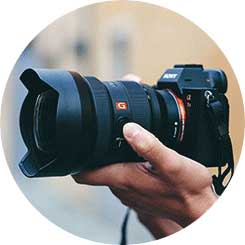
Trade in your old equipment
Fast and easy trade in service ensures your old gear is collected efficiently and you are paid quickly! It's very simple to trade in your unwanted photography gear. Just head over to our dedicated Sell or Part Exchange page, fill out the details, and we'll get back to you with an offer for your old gear. Take the cash, or put it towards the cost of your new gear. It's up to you! Find out more
sign up to the newsletter
Keep up to date on the latest photography news, events and offers. Sign up now